The King Abdullah Petroleum Studies and Research Center (KAPSARC) in Riyadh stands as a major architectural achievement. Designed by Zaha Hadid Architects, the structure uses flowing, geometric forms that break from traditional building shapes. A key feature of the project is its aluminum cladding system, made of hundreds of uniquely curved panels. Each panel was digitally modeled and bent to match the building’s precise shape.
This article outlines how aluminum forming techniques supported the construction of one of the Middle East’s most complex architectural facades.
Architectural Goals and Material Demands
The design team focused on geometry and surface continuity to bring the building’s vision to life. KAPSARC’s structure is based on modular hexagonal units, which include deep folds and slanted skylights that give the exterior a sculpted appearance.
The goal for the cladding system was to form a consistent outer surface over a structure with uneven and shifting dimensions. Conventional panel systems couldn’t accommodate this complexity, so each panel was custom-formed to match its assigned position.
Because the building is located in a desert climate, it had to withstand high levels of sunlight, intense heat, and windblown sand. The aluminum cladding needed to hold its shape and resist surface damage throughout these changing conditions.
Advanced 3D Modeling to Drive Aluminum Bending

The design process used parametric modeling tools to define geometry and surface logic. Rhino and Grasshopper allowed the team to create a digital layout that included both form and fabrication steps.
The surface was divided into smaller sections, and each panel was shaped based on the curve and angle of its zone. Areas with complex contours were identified during the modeling stage and translated into machine-ready data for bending.
The digital workflow was linked to fabrication systems. This connection helped limit manual changes during production and kept the physical results consistent with the model.
Panel Fabrication & Bending Techniques
Each panel was made from 3003 aluminum sheets that were coated with a PVDF finish. The PVDF finish on 3003 aluminum typically measures at least 25 µm thick to resist UV damage and sand abrasion.
Forming Methods
Two shaping methods were used, based on the panel geometry:
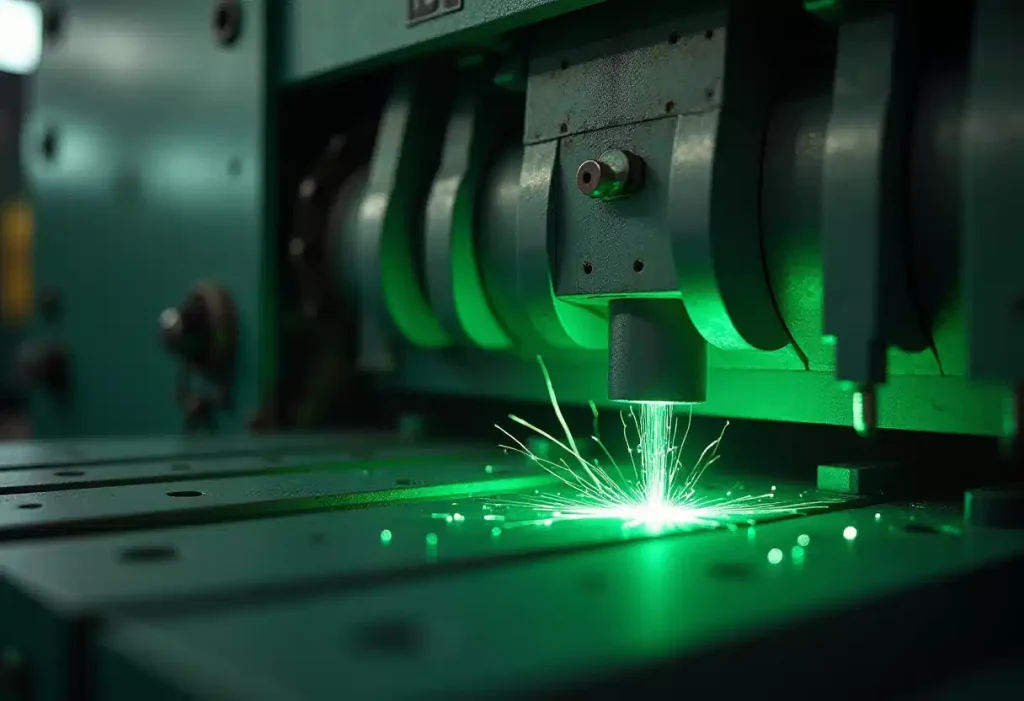
- Multi-axis CNC press bending formed crisp lines and sharp angles.
- Freeform roller bending handled curved and double-curved surfaces.
Joining Systems
The cladding system used concealed fasteners, which kept the surface visually clean. Support brackets were designed to reduce stress and allow for precise alignment across the façade.
Production Tolerances
Most panels met target tolerances under ±1 mm, but a small percentage required minor adjustments during installation. This helped the panels fit tightly along the surface and avoided the need for on-site trimming or reshaping.
Performance and Assembly Outcomes

The completed cladding system met performance goals in terms of structure, appearance, and environmental durability.
| Feature | Result |
| Wind & Heat Resistance | Façade elements were validated under LEED and performance evaluations, confirming wind durability and resilience under desert sun conditions. |
| Fabrication Accuracy | Over 90% of the panels were installed without needing on-site corrections |
| Surface Consistency | Smooth alignment was maintained across folds, slopes, and skylight edges |
Conclusion: Engineering Architecture into Reality
The KAPSARC project shows how digital planning and precision forming can work together to build architectural surfaces with complex form and high performance. Instead of relying on patchwork solutions or flat cladding systems, the project followed a direct path from 3D model to final assembly.
This method gives engineers and designers more control over shape, fit, and material behavior. When the tools are used correctly, the fabrication process supports the design from concept through to construction.
As architecture continues to shift toward complex shapes and climate-resistant materials, aluminum bending will remain a reliable method for building smart and durable facades. Projects like KAPSARC prove that formed aluminum can meet both aesthetic and structural demands without compromise.
Visit Inductaflex for more sources.